Discount Foundation Repair helps homeowners identify early warning signs of structural movement before small issues become major repairs. In Texas, changing soil conditions and shifting moisture levels put constant stress on foundations, making early detection one of the best ways to protect a home.
Many homeowners ignore the first signs because the changes seem minor. A small crack in the wall or a sticking door may not feel urgent at first. But these symptoms often point to foundation movement happening beneath the home. Understanding what to watch for can help prevent more serious structural damage later.
Cracks in Walls, Ceilings, and Brick
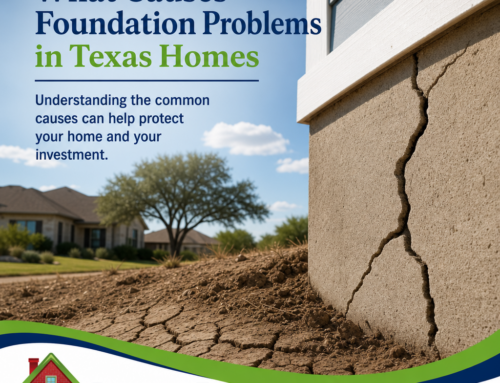
One of the most common signs of foundation trouble is cracking. These cracks often appear gradually and may spread over time as the foundation shifts unevenly.
Inside the home, homeowners may notice cracks above doors and windows, along ceiling corners, or running through drywall seams. Outside, brick mortar joints may crack or separate as the structure moves.
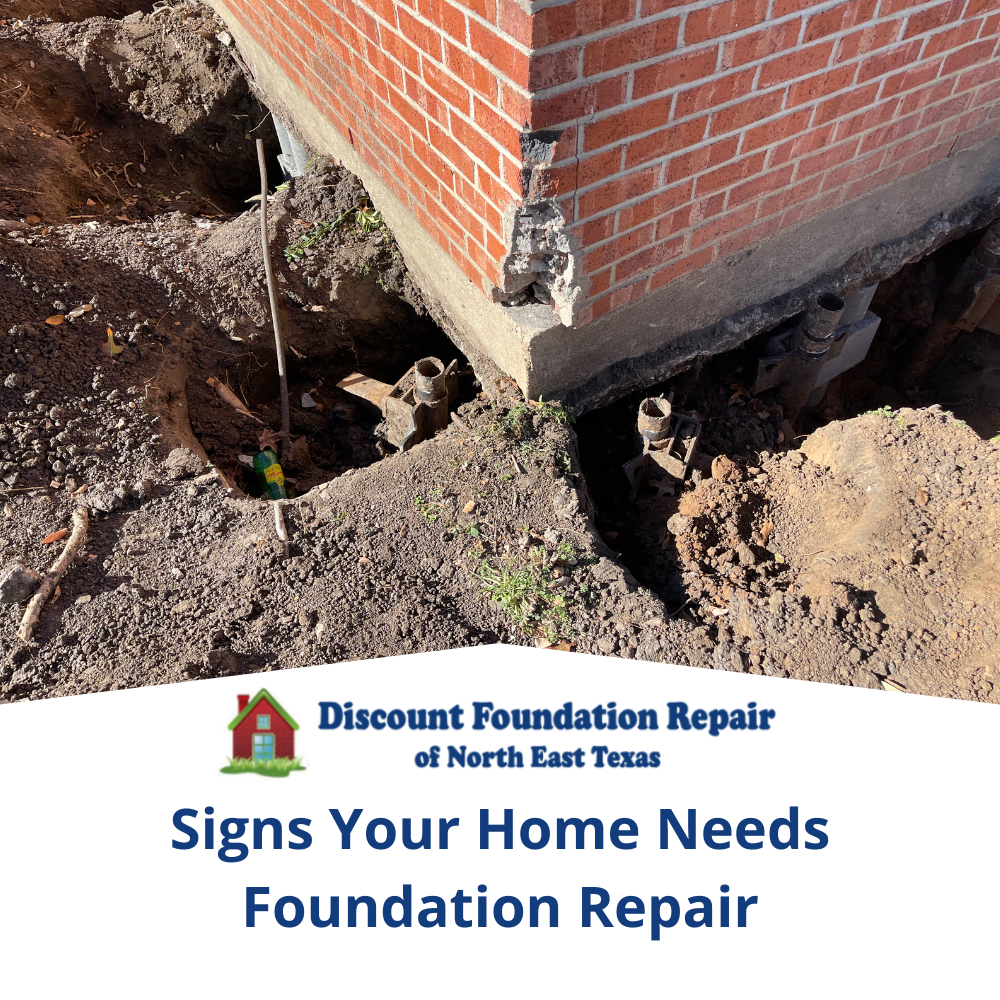
Not every crack means major damage, but certain patterns deserve attention. Horizontal cracks, stair-step brick cracks, or cracks wider than a quarter inch often indicate structural stress.
Homes experiencing active movement usually develop additional symptoms alongside cracking, which is why a full inspection is important.
Read more about early warning signs of foundation damage
Doors and Windows That Stick
When a foundation shifts, the frame of the house moves with it. This movement changes the alignment of doors and windows, making them difficult to open or close properly.
Homeowners often notice:
- Interior doors rubbing against the frame
- Windows that suddenly become hard to lock
- Gaps appearing around door frames
These issues happen because the home is no longer sitting evenly on the foundation. Even small amounts of movement can twist framing enough to create noticeable alignment problems.
Texas homes built on expansive clay soil are especially vulnerable during periods of drought followed by heavy rain.
Uneven or Sloping Floors
Floors that slope, dip, or bounce can signal foundation settlement beneath the home. This is especially common in pier and beam homes but also occurs in slab foundations when one side settles more than another.
Homeowners sometimes notice furniture leaning slightly or balls rolling across the floor without being pushed. In other cases, walking through the home may feel uneven underfoot.
Sloping floors can worsen over time if the soil beneath the structure continues shifting. Early stabilization helps prevent larger structural corrections later.
Learn how house leveling restores stability
Gaps Around Walls and Trim
As foundations shift, separation may appear between walls, ceilings, cabinets, or trim. Crown molding may pull away from the ceiling, baseboards may separate from the wall, or counters may develop gaps near backsplashes.
These gaps occur because the structure is moving unevenly. While cosmetic at first, they often point to deeper structural changes happening beneath the surface.
Many homeowners notice these problems after long dry summers or periods of excessive rain, both of which affect Texas soil conditions dramatically.
Exterior Signs Around the Foundation
Foundation problems do not only appear inside the home. Outside symptoms often provide some of the clearest warning signs.
Watch for:
- Cracks in the foundation itself
- Brick separation or leaning
- Soil pulling away from the slab
- Water pooling near the home after rain
Poor drainage is one of the leading contributors to foundation damage in North Texas. Water collecting near the slab causes soil expansion, while dry conditions lead to shrinking and settlement.
See how drainage problems affect foundations
What Causes Foundation Movement in Texas?
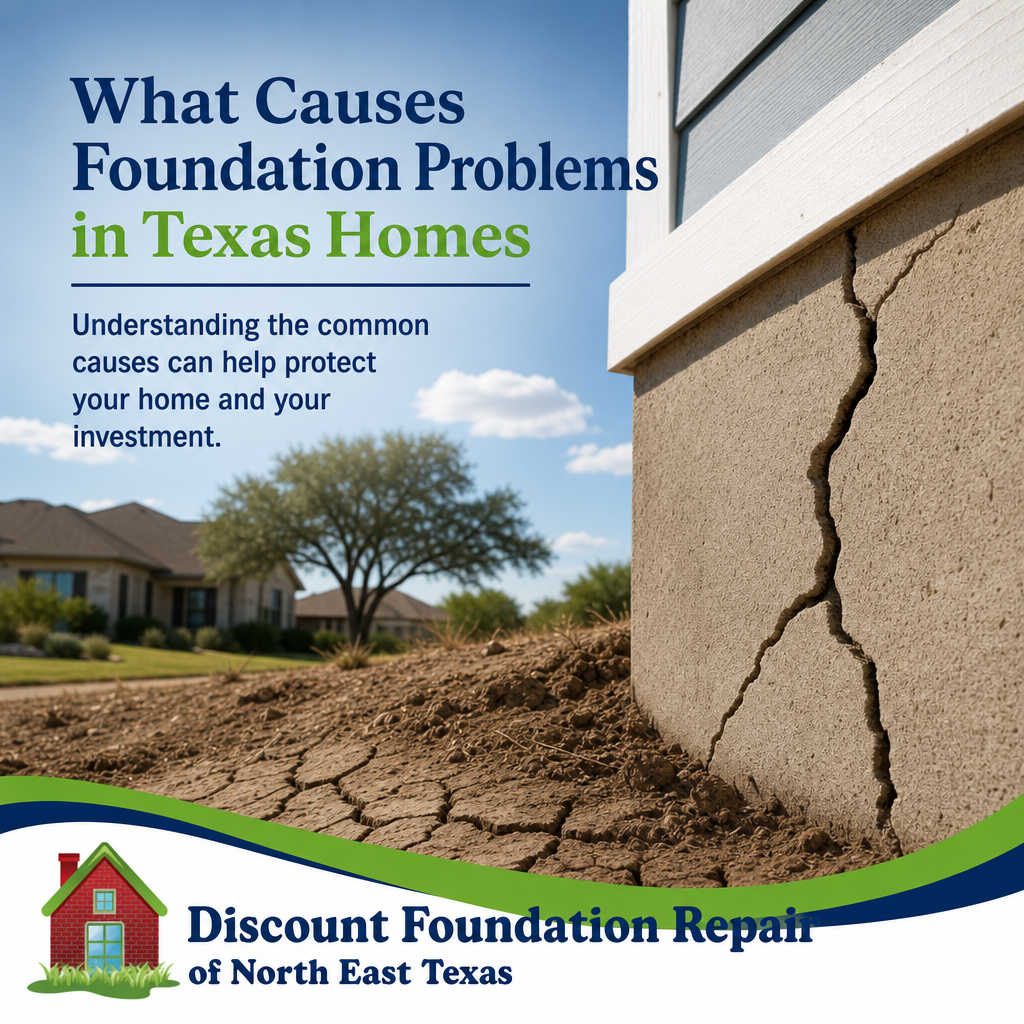
The biggest factor affecting Texas foundations is expansive clay soil. This soil absorbs moisture during rainy periods and shrinks during droughts. That constant expansion and contraction creates movement beneath homes.
Additional causes include:
- Poor drainage around the property
- Tree roots removing moisture from soil
- Plumbing leaks beneath the slab
- Improper grading or soil compaction
Even newer homes can develop foundation problems when these conditions combine over time.
Why Early Repairs Matter
Foundation damage rarely improves on its own. Small issues often grow into larger structural problems when movement continues unchecked.
Ignoring warning signs can eventually lead to:
- Larger wall and ceiling cracks
- Plumbing damage beneath the home
- Roof and framing stress
- Reduced property value
Early inspections help identify whether the movement is cosmetic, minor, or structural. Addressing the issue early often means less invasive repairs and better long-term stability.
“We noticed doors sticking and cracks forming around the windows. Discount Foundation Repair explained exactly what was happening and fixed the issue before it spread throughout the house.” — Homeowner in Fort Worth, TX
Professional inspections give homeowners peace of mind and help prevent expensive secondary damage later.
Schedule a foundation inspection today
For additional information about structural movement and home maintenance, visit the International Association of Certified Home Inspectors