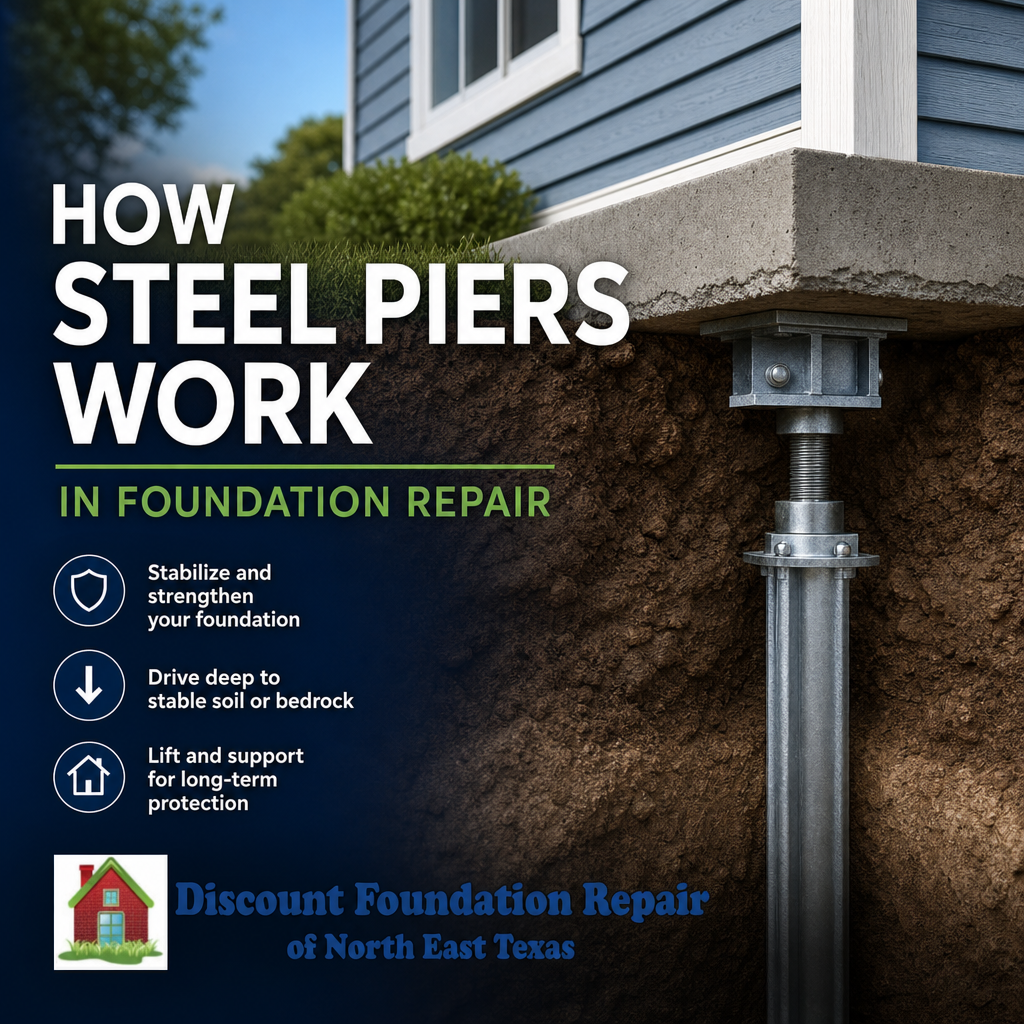
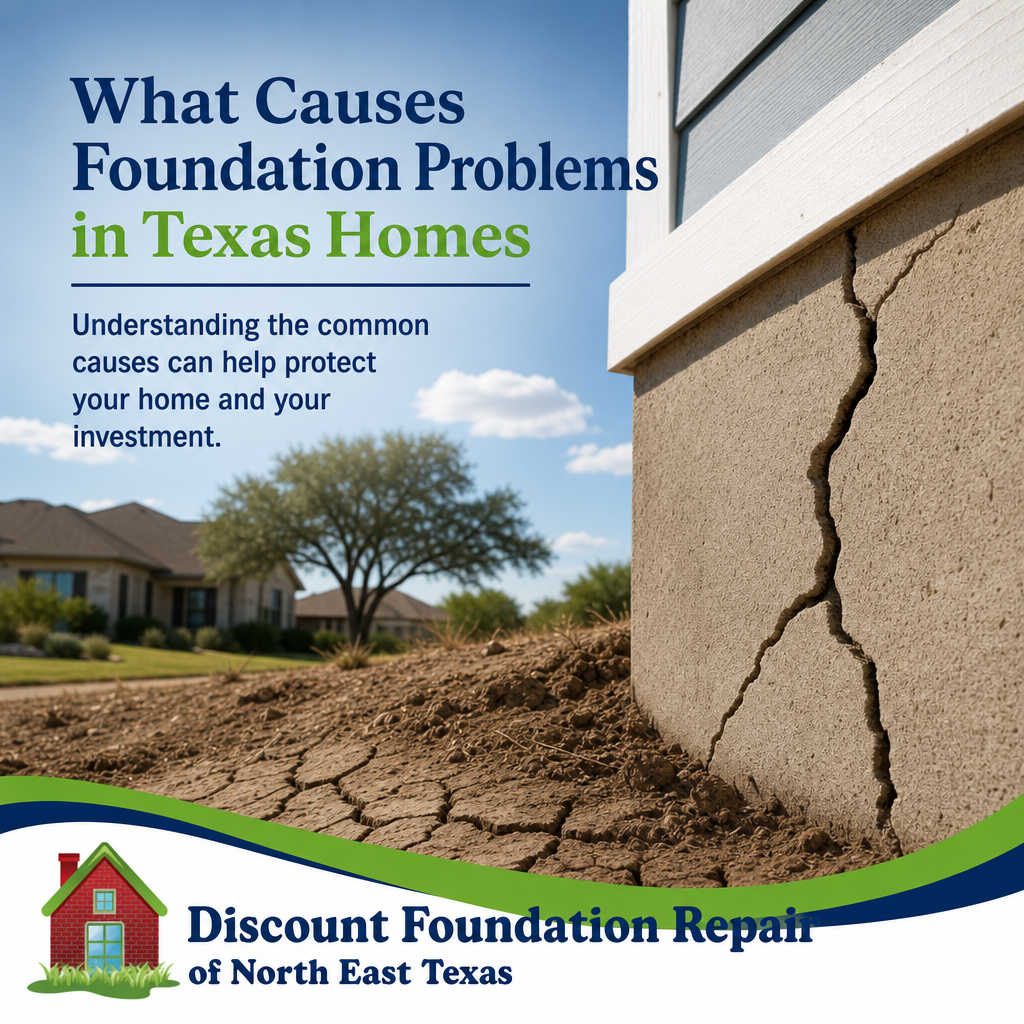
Discount Foundation Repair helps Texas homeowners understand why seasonal temperature changes can impact their home’s foundation. In North Texas and surrounding regions, the combination of clay-heavy soil and shifting weather patterns creates ideal conditions for soil movement—which leads to cracks, sloping floors, and structural damage.
If your home has ever developed foundation problems after a long hot summer or a sudden winter freeze, it’s not a coincidence. Changes in temperature affect the moisture and volume of soil, which directly impacts how stable your home’s foundation remains.
The Role of Expansive Clay Soil
Most Texas homes are built on clay-rich soil, which expands when it absorbs moisture and shrinks as it dries out. This constant expansion and contraction—known as the shrink-swell cycle—puts stress on foundations.
Temperature changes influence this cycle:
- Hot, dry weather dries out the soil, causing it to pull away from the foundation.
- Sudden rain or humidity after dry periods leads to rapid swelling.
- Cold snaps can cause freeze-thaw cycles that shift soil and lift or settle the foundation.
Even well-built homes can shift over time with repeated temperature-driven soil changes.
Signs Your Foundation Is Affected by Weather
Foundation damage often starts small. Seasonal shifts in temperature and moisture levels can gradually cause issues that become noticeable indoors and out.
Look for signs such as:
- Cracks in drywall, bricks, or floor tiles
- Doors or windows that stick or no longer align
- Gaps between walls and ceilings
- Sloping or uneven floors
These problems may get worse during or after extreme temperatures.
Read more early warning signs of foundation trouble
Summer Heat and Foundation Damage
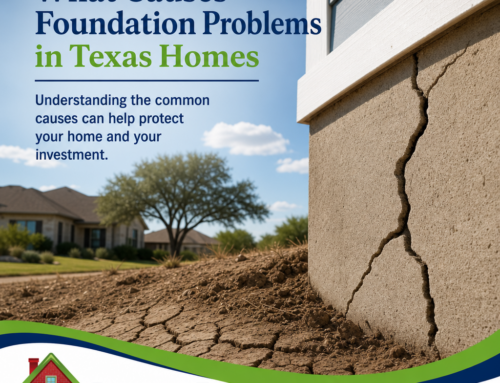
Texas summers are hot and dry. As temperatures rise, moisture evaporates from the ground, and the soil under your foundation begins to shrink. This often results in foundation settling, especially around the edges where shade and moisture levels differ.
Clay soil becomes brittle when dry, creating air pockets and gaps under the slab. Over time, unsupported areas may crack, slope, or sink.
Outdoor landscaping can make the problem worse. Trees and plants pull moisture from the soil, adding to the dryness near the foundation.
Winter Temperatures and Foundation Shifting
Winter can be just as hard on foundations. While Texas winters are short, they often bring quick freezes followed by warming. When soil freezes, any moisture inside it expands. As it thaws, it contracts again.
This expansion and contraction can lift or shift parts of the foundation—a process known as frost heave. Even minor freezing can cause movement in homes with shallow footings or poorly drained soil.
Pier and beam homes are especially vulnerable during this season, as cold air and moisture can collect in crawl spaces.
See how pier and beam repairs work
How to Protect Your Foundation from Seasonal Changes
You can’t control the weather, but you can manage how your home handles the effects. Foundation-friendly habits and improvements help reduce risk.
1. Keep soil moisture consistent
Install soaker hoses around the perimeter of your home and run them during dry spells. This keeps the soil from shrinking too much.
2. Maintain proper drainage
Make sure gutters and downspouts direct water away from the foundation. Water pooling after rain increases expansion and erosion.
3. Schedule annual inspections
A foundation specialist can catch small shifts before they turn into big repairs. Early detection is key during seasonal transitions.
Schedule an inspection with Discount Foundation Repair
Real-World Example: North Texas Homeowner
“After a brutally hot summer followed by heavy fall rains, we noticed cracks forming above the doors and our floors started to slope. Discount Foundation Repair came out and found movement in the foundation. They installed piers to stabilize the slab, and everything has been solid since.” — Homeowner in Arlington, TX
Understanding the seasonal risks helped this homeowner fix the issue before it got worse.
For more technical insight into how weather impacts soil and foundations, see the Texas A&M AgriLife Extension’s guide.
Get the Help You Need
When you need help protecting your home from temperature-driven foundation damage, call 817-226-7221. Discount Foundation Repair offers expert evaluations and solutions designed for Texas weather and soil.