Concrete Leveling vs Foundation Repair: Which Is Better when your floors slope, cracks appear, or exterior concrete starts sinking? Discount Foundation Repair helps homeowners identify the right repair path to protect their property from structural damage.
Concrete leveling is usually best for sunken sidewalks, patios, driveways, garage floors, and non-structural slabs. Foundation repair is needed when the home itself is shifting, settling, cracking, or showing signs of structural movement. The right choice depends on what is moving, what caused it, and whether the problem affects your home’s load-bearing foundation. Discount Foundation Repair provides honest foundation evaluations so homeowners can understand the difference before investing in repairs.
Concrete leveling for sunken sidewalks, patios, driveways, and garage slabs
Concrete leveling, also called slab leveling, is designed to lift and stabilize settled concrete surfaces that are not supporting the main structure of the home. Common areas include sidewalks, porches, patios, pool decks, garage floors, and driveway sections. These slabs can sink when soil washes out, compacts unevenly, or expands and shrinks due to moisture changes.
For many homeowners, concrete leveling is a practical option when the slab is still in decent condition but has dropped, tilted, or created a trip hazard. Instead of removing and replacing all the concrete, a leveling process can fill voids beneath the slab and raise it closer to its original position. This can improve drainage, reduce safety concerns, and help prevent further cracking.
Concrete leveling is not the same as structural foundation repair. If the slab supports only foot traffic, vehicles, or outdoor living space, leveling may be enough. If the slab is part of the home’s foundation system or connected to structural movement inside the house, a deeper foundation inspection is needed.
Foundation repair for settlement, wall cracks, and structural movement
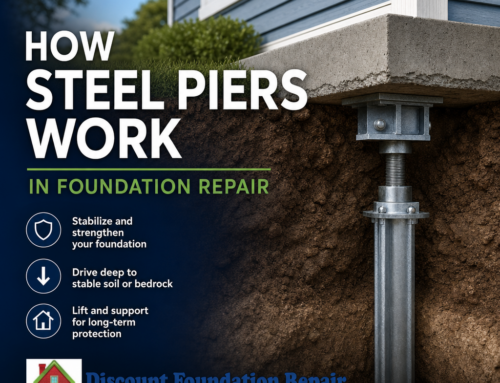
Foundation repair addresses movement in the actual support system beneath a home or commercial building. This can include slab foundations, pier and beam foundations, crawl space supports, grade beams, footings, and load-bearing structural areas. If doors stick, floors slope, interior walls crack, or exterior brick separates, the issue may be more serious than a sunken concrete surface.
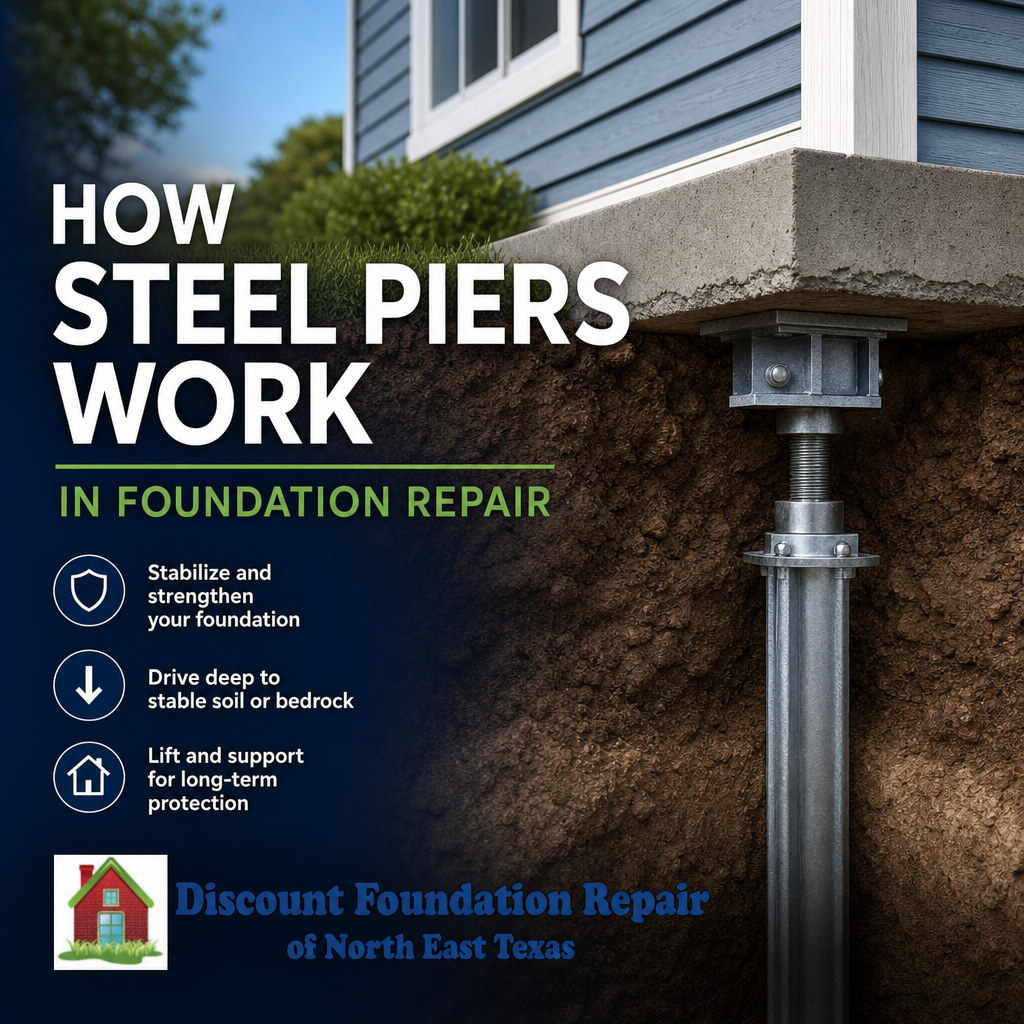
Slab foundation repair may involve stabilizing settled areas, addressing voids under the slab, correcting drainage conditions, or installing support systems based on the property’s condition. Pier and beam repair may involve replacing damaged beams, adjusting supports, improving crawl space conditions, or correcting sagging floor areas.
The goal is long-term structural stability, not a quick cosmetic patch. Discount Foundation Repair looks at the full picture, including soil movement, drainage, visible cracking, elevation changes, and the type of foundation system. This helps homeowners avoid paying for the wrong repair.
How soil movement and drainage affect concrete slabs and foundations
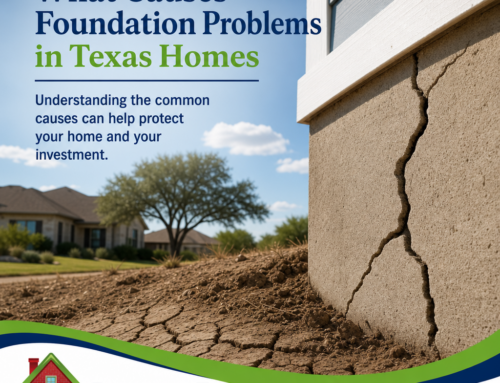
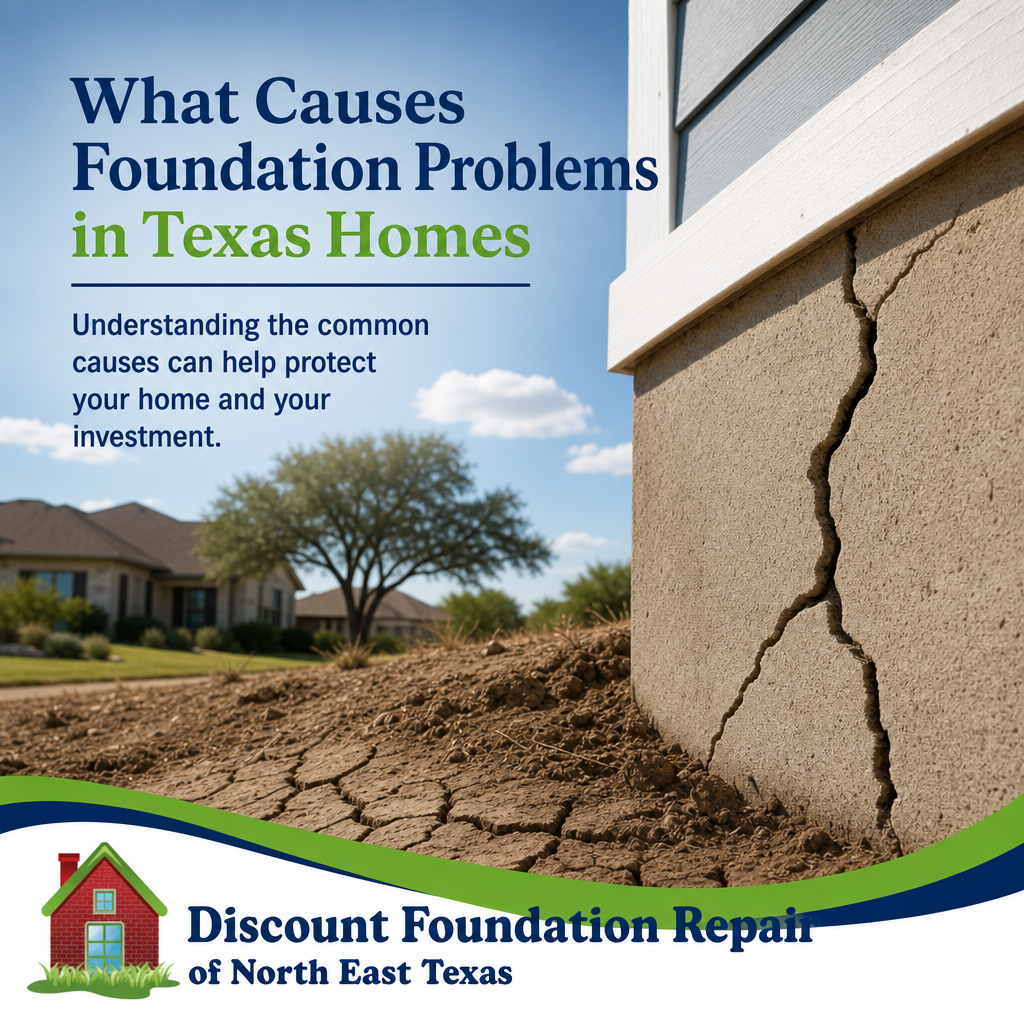
Soil is one of the biggest factors behind both sunken concrete and foundation damage. Expansive clay soil can swell when wet and shrink during dry periods. Poor drainage can wash away support beneath slabs. Plumbing leaks, clogged gutters, low spots in the yard, and improper grading can all lead to uneven moisture levels around the foundation.
When soil changes under a driveway or patio, concrete leveling may solve the visible settlement. When soil movement occurs under the home’s foundation, structural repairs may be necessary. The challenge is that both problems can look similar at first: cracks, gaps, sinking corners, and uneven surfaces.
Drainage correction often plays an important role in both repair types. If water keeps pooling near the foundation or flowing beneath concrete slabs, the same movement can continue. A dependable foundation repair company should consider moisture control, gutter discharge, grading, and soil support before recommending a repair plan.
Signs you need slab leveling instead of structural foundation repair
Some concrete problems are mostly surface-level or isolated to exterior flatwork. In these cases, concrete leveling may be the better fit. Homeowners often notice uneven walkways, tilted patio sections, low driveway panels, or gaps beneath steps.
You may need slab leveling if you see:
- Sunken sidewalk or driveway panels
- Trip hazards around patios, walkways, or pool decks
- Garage floor sections that have settled but no major wall movement
- Water draining toward the house due to tilted concrete
- Gaps under concrete caused by soil washout
- Cracks limited to outdoor flatwork rather than interior walls
These problems should still be checked carefully. A driveway sinking near the garage or a patio pulling away from the house can sometimes point to drainage or soil issues affecting the foundation. An inspection helps separate cosmetic concrete settlement from structural movement.
Signs foundation repair may be the better option
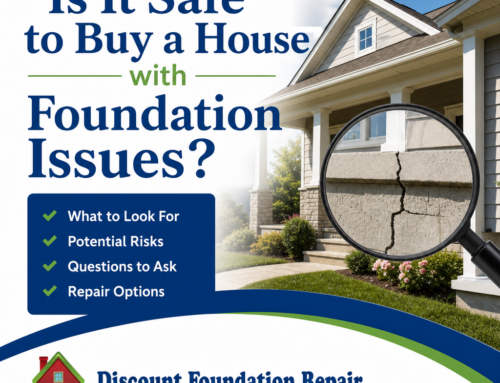
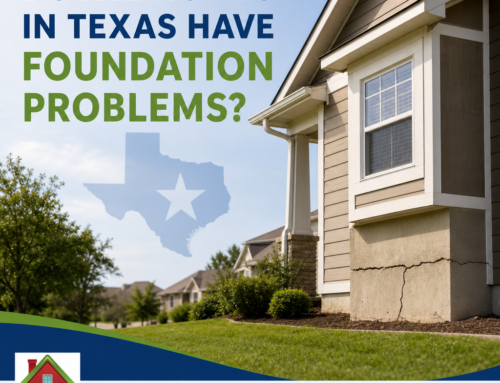
Foundation problems often show up in several parts of the home at once. You may notice cracks above doors and windows, stair-step cracks in brick, sloping floors, sticking doors, or separation between walls, trim, and ceilings. These symptoms can mean the foundation is no longer supporting the structure evenly.
Pier and beam homes may show bouncy floors, sagging rooms, crawl space moisture, rotting wood, or shifting piers. Slab homes may show floor cracks, tile cracking, baseboard gaps, and uneven elevations across rooms. Commercial buildings can also experience settlement that affects walls, doors, flooring, and structural performance.
Foundation repair is usually the right direction when movement affects the building, not just the surrounding concrete. Discount Foundation Repair evaluates residential and commercial properties to recommend repair options based on actual conditions rather than assumptions.
Foundation repair cost, home value, safety, and repair timeline concerns
Homeowners often care most about cost, property damage, safety, repair timelines, and whether the work will protect the value of the home. Concrete leveling is often less involved than structural repairs, but cost should not be the only deciding factor. A lower-cost leveling job will not solve a foundation that is actively settling.
Foundation repair costs depend on the type of foundation, amount of movement, soil conditions, drainage problems, access, and repair method. Some homes need localized crack repair or minor stabilization. Others may need more extensive house leveling, pier installation, crawl space repairs, or drainage correction. A clear inspection helps prevent surprise expenses and unnecessary work.
Repair timelines also vary. Some leveling work can be completed quickly, while structural stabilization may require more planning, equipment, and site preparation. The key is choosing a company that explains the findings clearly, discusses repair options, and focuses on long-term stability. Protecting home value starts with addressing the source of the movement before cracks widen, doors worsen, or water creates additional damage.
When you need clear answers about concrete leveling and foundation repair
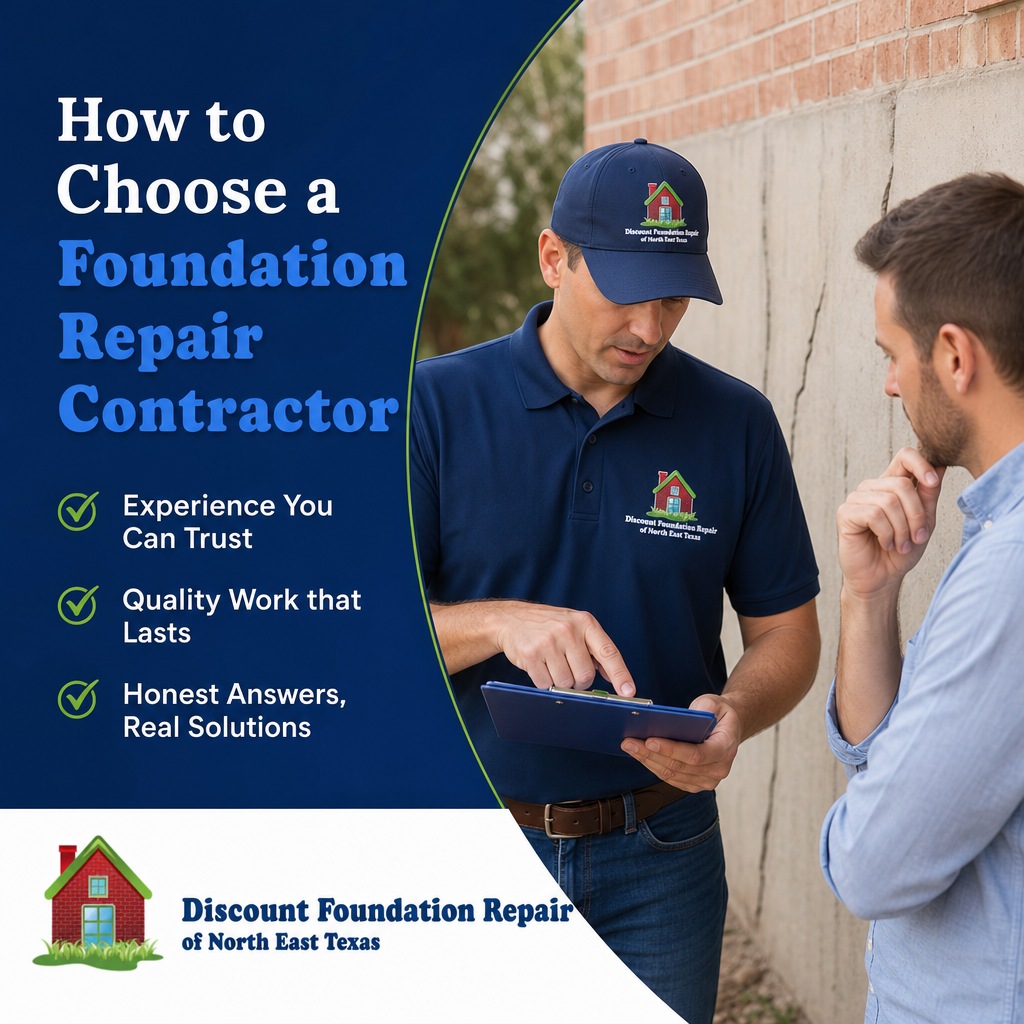
When you need help deciding between concrete leveling and foundation repair, Discount Foundation Repair provides practical guidance based on your property’s condition. Our experienced crews inspect visible damage, look for drainage and soil movement concerns, and explain whether the issue appears isolated to concrete flatwork or connected to structural foundation movement.
Whether you need slab leveling, foundation inspections, pier and beam repair, crack repair, drainage correction, commercial foundation services, or full foundation leveling, our team focuses on dependable workmanship and fair recommendations. If your concrete is sinking, your floors are uneven, or cracks are spreading, schedule an inspection with Discount Foundation Repair and get the information you need before the damage gets worse.